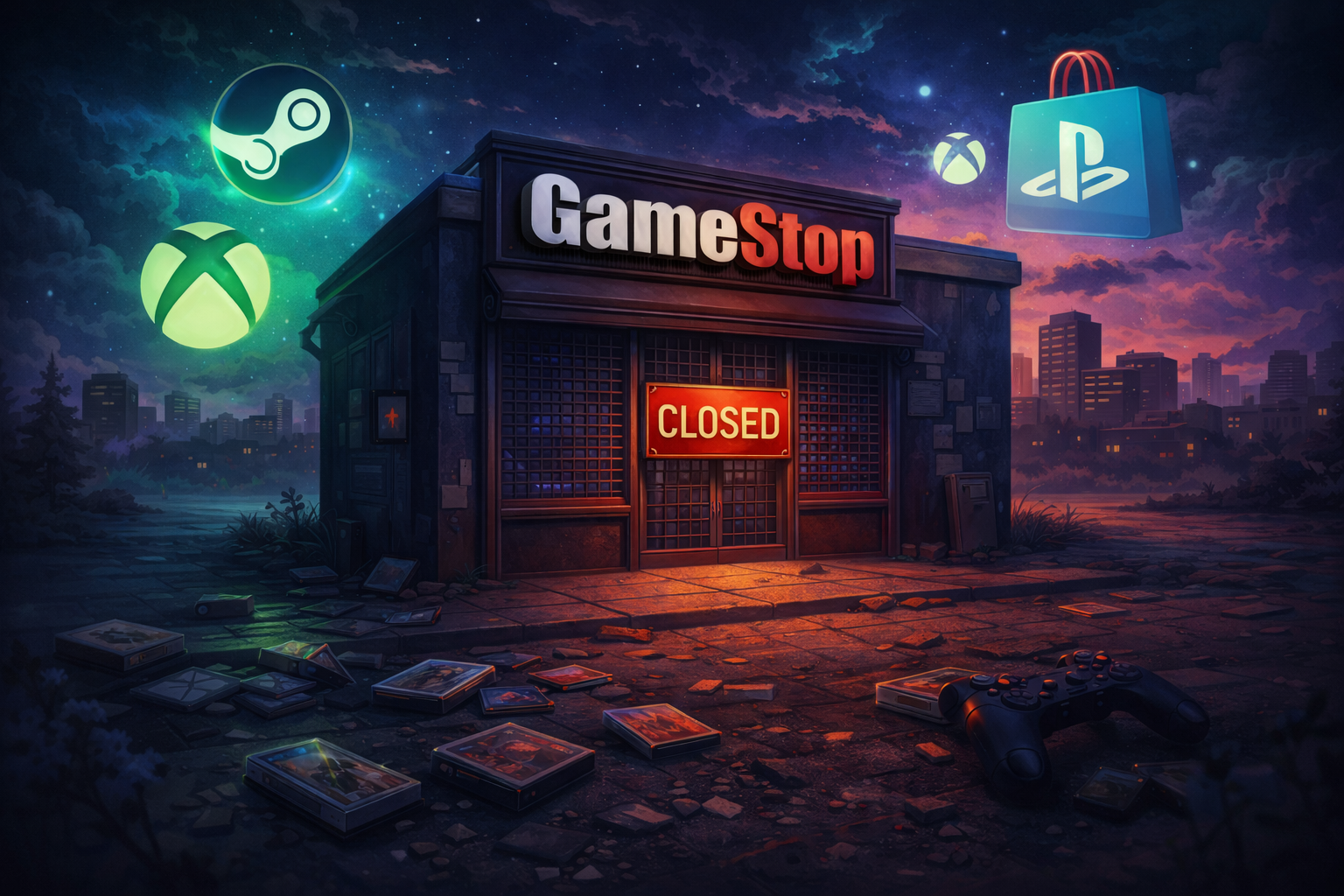
In recent years, GameStop store closures have become a recurring headline, with the company steadily reducing its brick-and-mortar footprint across the United States and internationally.
While the move is often framed as a natural response to evolving consumer habits, it represents a significant shift for the gaming industry—one that extends far beyond a single company.
As physical game sales decline and digital distribution becomes the norm, the landscape of how games are bought, sold, and preserved is changing.
This article explores what the shrinking presence of physical video game retail means for gamers, developers, collectors, and the broader ecosystem.
GameStop Store Closures: A Sign of the Times
GameStop, once a dominant force in video game retail, has faced significant challenges in recent years. While the company still operates hundreds of locations, it has closed thousands since the mid-2010s, citing changes in customer behavior and a rapidly digitizing market.
Several factors have accelerated these closures:
● The rise of digital game distribution via platforms like Steam, PlayStation Store, Xbox Marketplace, and Nintendo eShop.
● Increased reliance on online storefronts and subscription services.
● Reduced demand for physical discs and cartridges as consoles shift toward digital-first ecosystems.
Although GameStop has experimented with new strategies, including esports partnerships, collectible merchandise, and retro game sales, the core business of selling new and used games has become less viable.
Why Are Physical Game Stores Disappearing?
The decline of traditional video game retail is not simply about competition or corporate strategy. It reflects a much broader transformation in how people consume media.
1. Digital Distribution Is More Convenient
For most players, downloading a game directly to a console or PC is faster and easier than visiting a store or waiting for a shipment. Instant access, automatic updates, and seamless integration with cloud saves have made digital storefronts the preferred choice for many.
2. Physical Media Is Losing Its Functionality
Modern physical games often serve as little more than license keys. With day-one patches, online activation requirements, and missing content that must be downloaded, owning a disc no longer guarantees a complete experience.
3. Retail Inventory Is Shrinking
As demand for physical products drops, stores carry fewer titles, fewer copies per release, and fewer niche or indie games. This creates a feedback loop where customers are less likely to visit in the first place.
4. Used Game Sales Have Declined
Used games were once a major draw for GameStop and similar retailers. However, digital ecosystems do not support resale, and many publishers now discourage used sales through single-use codes or always-online requirements.
What Gamers Gain and Lose With Digital-Only Ecosystems
The shift toward digital game distribution has clear advantages—but it also comes with trade-offs that affect different parts of the gaming community in unique ways.
Benefits of Digital Game Distribution
● Instant access to new titles at launch.
● Frequent sales and bundles across platforms.
● No physical storage required, reducing clutter.
● Cross-device libraries, especially on PC and mobile.
● Global reach for indie developers through unified storefronts.
For most everyday players, digital distribution offers a level of convenience and variety that physical retail simply cannot match.
Drawbacks and Concerns
● No true ownership of most digital games; access is often tied to platform accounts or licenses.
● Limited resale or sharing, as digital content is non-transferable.
● Preservation issues, particularly for games that are removed from storefronts.
● Loss of tactile collecting, a significant part of gaming culture for some fans.
● Dependency on platform policies, pricing, and availability.
These downsides have sparked conversations about digital rights, archival practices, and the long-term value of game libraries tied to corporate ecosystems.
The Impact on Collectors, Used Games, and Preservation
Physical games have always played a key role in game collecting, trading, and preservation.
With the decline of physical game sales, entire communities built around collecting boxed editions, rare cartridges, and vintage discs are shrinking.
Game Collectors
Collectors face a narrowing market for new physical releases, with many modern games offering only limited or special editions in physical form. While niche publishers continue to serve this market, rising prices and smaller print runs have made collecting more exclusive.
Used Game Market
As digital licensing replaces ownership, the used game market has contracted significantly.
What was once a primary revenue stream for physical retailers has become a relic of an earlier era.
Game Preservation
Perhaps the most pressing concern is preservation. Many games, especially digital-only releases, risk disappearing completely if removed from storefronts or if platform support ends.
Without physical media or legal backups, these titles may be lost to time.
Efforts from nonprofit organizations and gaming historians have helped preserve some of this content, but challenges remain around legality, access, and funding.
What the Shift Means for the Gaming Industry
The decline of physical game stores signals more than just a change in how games are purchased—it’s a marker of larger structural shifts across the industry.
Publishers and Platforms Gain More Control
Digital ecosystems place more power in the hands of publishers and platform holders. Pricing, discoverability, and promotional strategies are increasingly dictated by a few key players.
While this can benefit consumers with frequent sales and curated content, it also means less competition and fewer alternative options.
Smaller Developers Face New Visibility Challenges
In a world without physical retail, shelf space is no longer the gatekeeper—but algorithmic discovery is. Independent developers now rely on digital storefront algorithms, influencers, or platform partnerships to be seen.
The Role of Retail Shifts
Big-box stores and online marketplaces still sell physical games, but with fewer SKUs and less fanfare. Retail has become more about collectibles, peripherals, and event tie-ins than core game sales.
What Physical Game Stores Still Offer
Despite the overall decline, physical retail still holds unique value:
● In-person community spaces, particularly in local or niche stores.
● Access to retro and out-of-print games through resale.
● Tangible products for collectors and gift-givers.
● Entry points for casual or younger gamers who may not shop online.
For now, physical game stores still serve as hubs of nostalgia and accessibility, even as their commercial influence continues to fade.
Closing Thoughts
The ongoing wave of GameStop store closures is not just about one company’s restructuring—it is part of a broader transformation in the gaming industry.
As players shift toward digital-first experiences, the role of physical game retail has fundamentally changed.
What was once a core pillar of the gaming world is now becoming a specialty niche, shaped by collectors, preservationists, and a smaller but passionate audience.
Meanwhile, developers, publishers, and players continue to navigate the trade-offs of a fully digital ecosystem—one that offers convenience and reach, but at the cost of physical permanence.
As the future unfolds, the story of game retail will remain a vital part of how we understand the evolution of the medium itself.